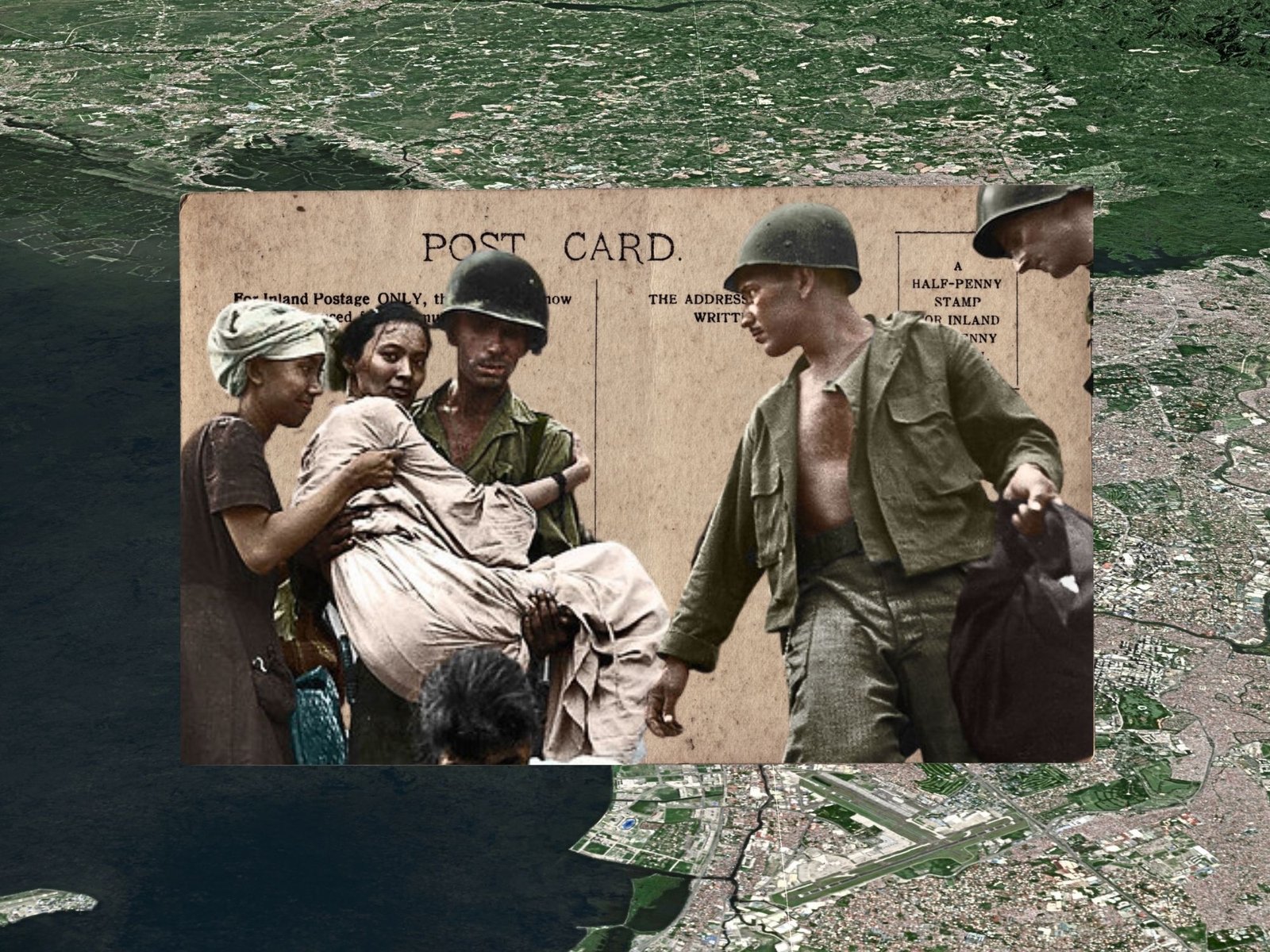
Three World War II stories from our grandmother, who was a little girl in Manila when it was destroyed and liberated.
When people live in peace for a few generations, we forget that horrible, large-scale events are still possible. When we got back from our New Year 2020 trip to La Union, the media was bursting with bad news. #WorldWar3 was trending on Twitter and Australian bushfires were raging. A week later, I gazed in wonder at the ash that was falling, slow and thick, on the city: Taal Volcano was erupting.
We closed all our windows and bought masks — the first masks of the year. A few days later, when my father called to tell me about rumors of a mysterious super-virus in China, I laughed it off as fake news. Surely the planet had reached its quota of unfortunate events? (Editing this in August of 2026, in the middle of what can plausibly be called the third world war and the slow intensification of vengeful climate events, I shake my head at this naiveté.)
By March, I was no longer laughing, except in rueful disbelief and dark amusement. Now, in the summer of 2021, amidst a global surge of the virus, I find myself extending too many condolences. Online, too many profile pictures have turned black. There are countless images of candles in the darkness.
This high tide of heartbreak reminds me of war. Which is, of course, a present reality in many places. But to the average metropolitan Filipino, international conflict is a distant and mythical thing. To quote the Viva Hotbabes and schoolchildren everywhere: “Noong unang panahon, panahon pa ng Hapon…” (“Long ago, in the time of the Japanese…”)
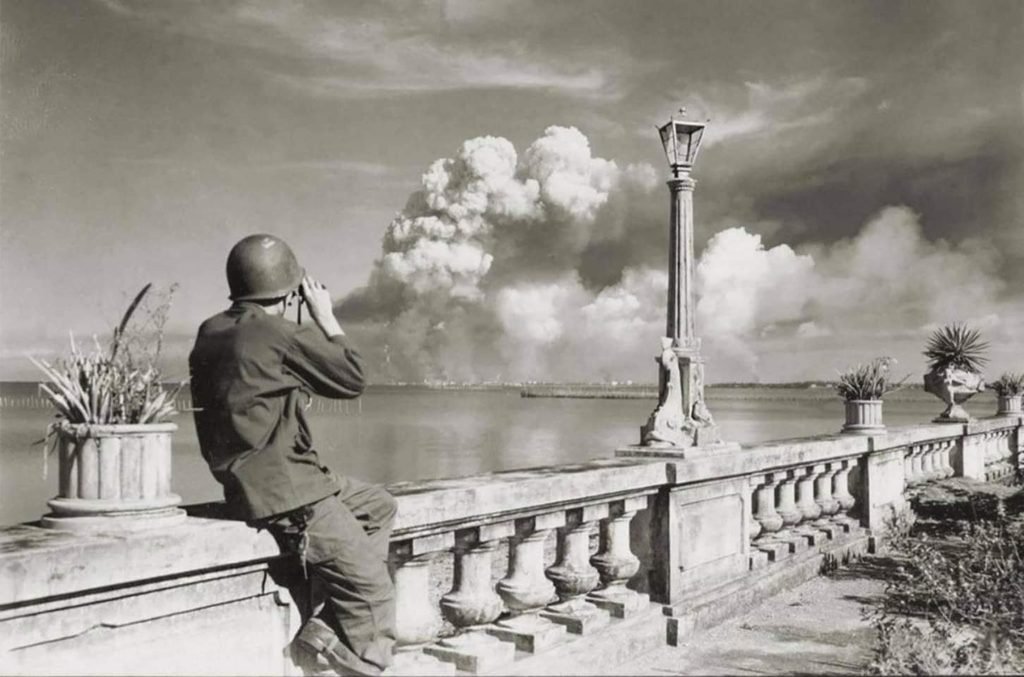
The last time our city fell was eight decades ago. From where I stand, at least, it’s hard to imagine that happening again. But World War II has not yet passed from living memory.
Manila, 1945
Born in Tondo in 1939, my husband’s grandmother Lola Betty was five years old during the Battle of Manila. When she was a baby, her mother put up a stall in the seaside market town of Baclaran, where they would eventually settle for good after the war.
Our stories take place in a very small area beside Manila Bay. Only 8km from Baclaran Church to Manila Cathedral in Intramuros.
In the early 1940s, as the U.S. began their campaigns to wrest the Philippines from Japanese occupation, it became dangerous to remain too near to the bay. (There was no reclamation area yet, where many malls, hotels, and casinos now stand.)
So Lola Betty family moved a little farther inland, but not so far as to affect their livelihood. So during the liberation of Manila, they lived in Conchu Street, in San Andres Bukid.
Our three stories are snapshots of that place and time: Manila, 1945, when it was one of the most devastated cities in the second World War. I’ll let the storyteller take over from here.
The Parachute
I saw it with my own eyes: the American soldier drifting in the wind, attached to a parachute.
Perhaps his plane had blown up. His enemies were simply waiting for him below. We watched as he floated low over our houses. People began to shout: “Jump! Let go! Jump now!“
If he fell here, he would be injured, but safe.
The American soldier just waved back. Did he know he was doomed and was he saying goodbye? Or was he telling us not to worry, because he still had hope? Because, we realized, he was trying to land in the sea.
Later, we heard that he hadn’t made it past Manila Bay. Japanese soldiers stationed near the water bayoneted him when he landed.
The Gasoline Station Ghost and Harada’s Son
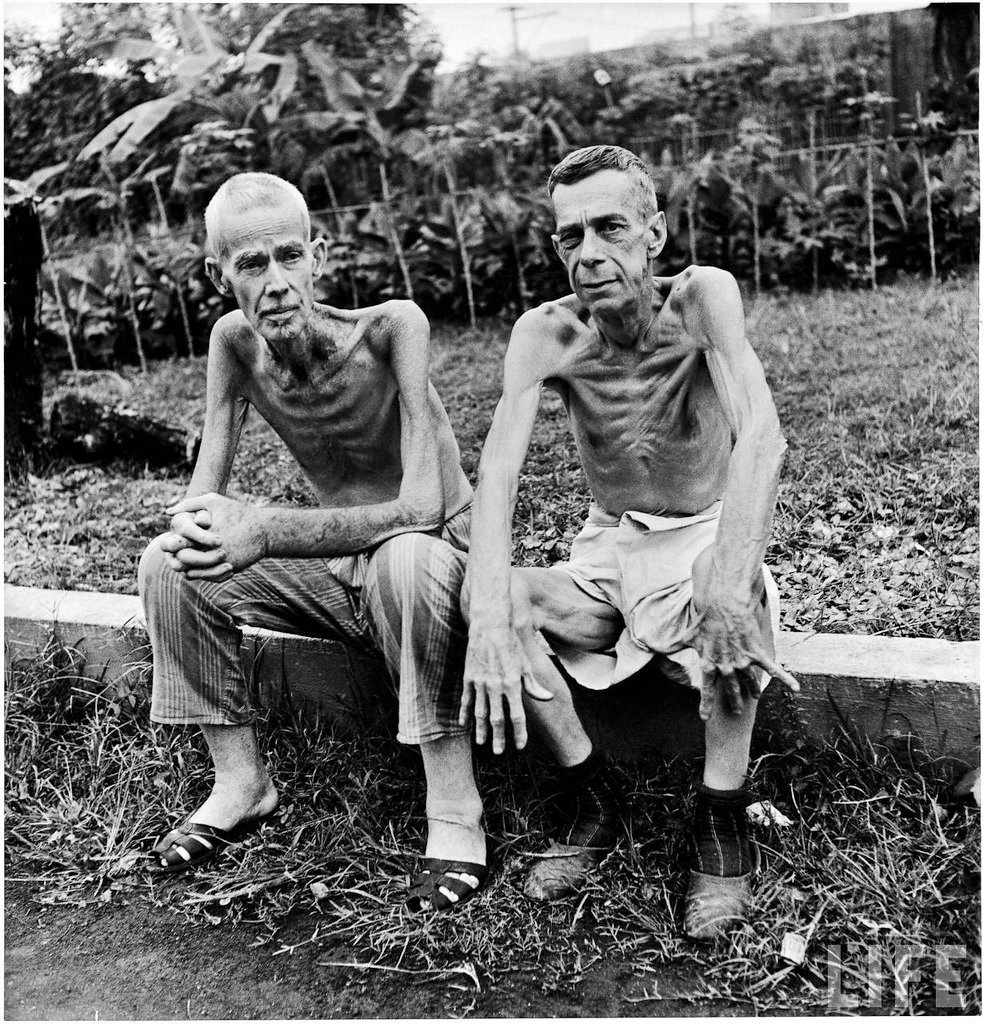
Do you know the gas station just around the corner from our house in Baclaran? That’s where the townspeople tied a Japanese soldier to a post. This was when war had just ended.
I was walking around with my baby brother when I saw him. When men passed, they would punch him in the gut or in the balls. When women passed, they would take off their slippers and beat him.
Standing nearby, but not too nearby, I began to cry.
“Why are you crying, little girl?” a man asked.
“Because they’re killing him!” I answered.
This reminds me of an acquaintance we had whose surname was Harada. His father was a Japanese soldier who had also been captured by townspeople and tied to a tree infested with fire ants. The young teenager stood by and wept as his father was devoured by gigantic ants and beaten by passersby.
Again and again, his father told him to go home, to hide, to pretend they were strangers. The father was obviously afraid that his son would be harmed, too. But the son kept watch until his father died. When it was over, the boy Harada dug his father’s grave.
The Japanese soldier in our town, the one I saw tied to a post, died before the Americans arrived to scour the area. Had he lived, the Americans would have taken him as a prisoner of war — that is, if he would have let himself be taken. Many of his comrades had fled to the tunnels of Intramuros and bombed themselves in ritual suicide rather than face capture.
His face had been blank and expressionless as the townspeople beat him and left him to slowly starve and weaken and die. I hadn’t seen the worst of the war, and maybe that’s why I couldn’t understand the hatred. But wasn’t he a person, too? That’s why I cried when I saw him suffering. I still think it was wrong.
Liberation
For very small children like me and my toddler brother, the war was not too frightening. The grownups fed and protected us. We only had to hide quietly when we were told.
The adults dealt with the harsher logistics. One of our uncles was a freelance auto mechanic, so we got a little insider information from his Japanese customers. Little whispers, like where major attacks would happen, where bombs were meant to fall. That was how we knew when to move away from Baclaran.
The value of money fell and people desperately hauled entire sacks of bills to the market. My mother had wisely saved a few MacArthur-endorsed “Victory” dollars, counting on their future value. Soon, however, we had to loot.
As the city around us fell, some people couldn’t resist hauling expensive appliances and furniture back home. But my family knew that nothing was more important than food at the time, so they looted wisely.
Stepping over the bloody bodies of priests and nuns in the ravaged convents, my uncles and older sister found high-quality imported canned goods. We accumulated enough sacks of rice to last us a long time.
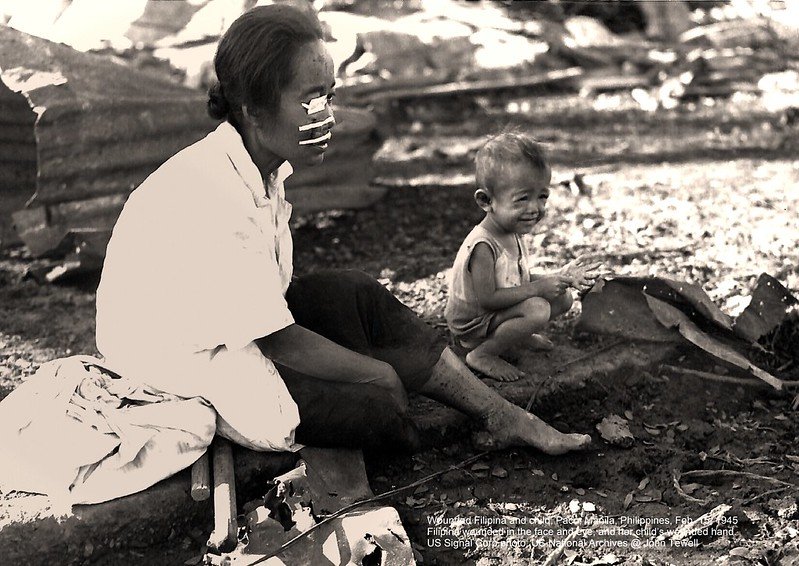
My uncles modified a unique, heavy-duty kariton, a wooden pushcart, with wheels from an Army jeep. Its bottom was padded with our sacks of rice, and it took three adults to push. My mother’s jewelry was hidden at home, in pillowcases.
“The pillowcases!” our mother screamed to our older sister in panic one evening. It was the night our street was set on fire. We had been preparing for dinner and bed when a neighbor came screeching down the street.
“Fire! The Japanese!” she was screaming. “Everyone get out!”
The woman was a Japanese soldier’s girlfriend. The war was ending and the Japanese were losing: This was a last-minute order. Thanks to the warning, when three soldiers marched into the neighborhood, throwing Molotov cocktails into windows, there was nobody home. Actually, they probably knew they were setting fire to empty houses.
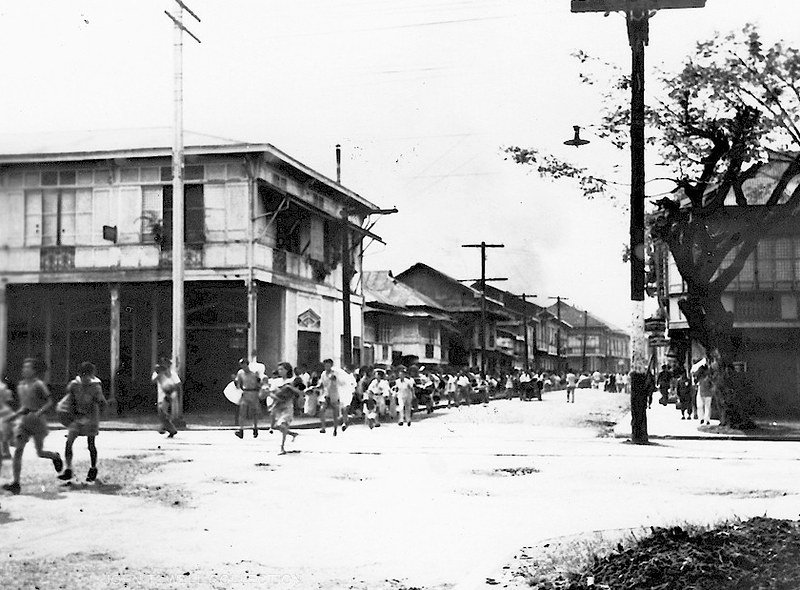
My little brother and I were placed into the kariton. The townspeople fled westward into uninhabited meadows, close to where the houses and buildings of Makati and Mandaluyong now stand.
We camped there for days and days. We had so much rice stored up, we could share with our neighbors. There was a little stream running nearby which served as our water source.
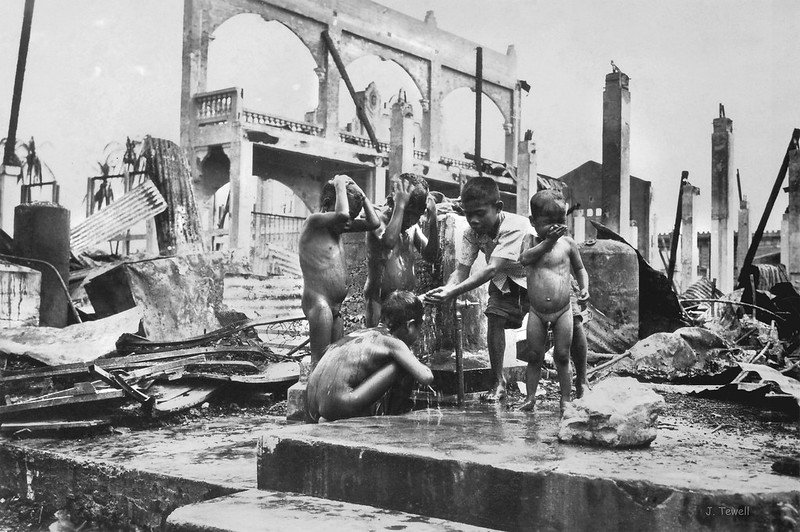
One morning, a few playmates and I explored the mudbanks, looking for things to eat. To our surprise, parts of the stream had just run dry, and there were clumps of big fish gasping and flopping in the earth. We returned to the adults victorious, covered in mud, but with an abundance of food.
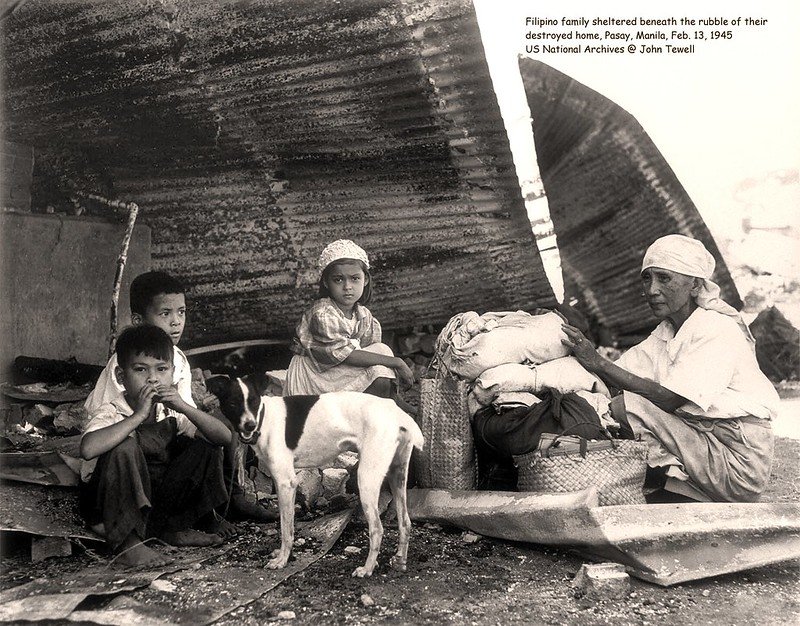
Soon, however, it was whispered that soldiers were headed our way. Friends or enemies, we had no way of knowing. The townspeople accepted that this was the end of our escape.
All the men and all the women prepared their weapons. They sharpened bolos, kitchen knives, and wooden stakes. They decided that they were ready to die — fighting.
As the older people armed themselves, they placed us small children in a little trench. For added protection, our handy kariton was placed over our heads. To our mother’s frustration, my little brother and I kept looking out to see what was happening.
For we felt the tremors in the ground. There was a tramp of feet coming our way.
Armed with deadly lances of wood and blades of steel, the people marched forward to meet the enemy. But no enemy came to meet them.
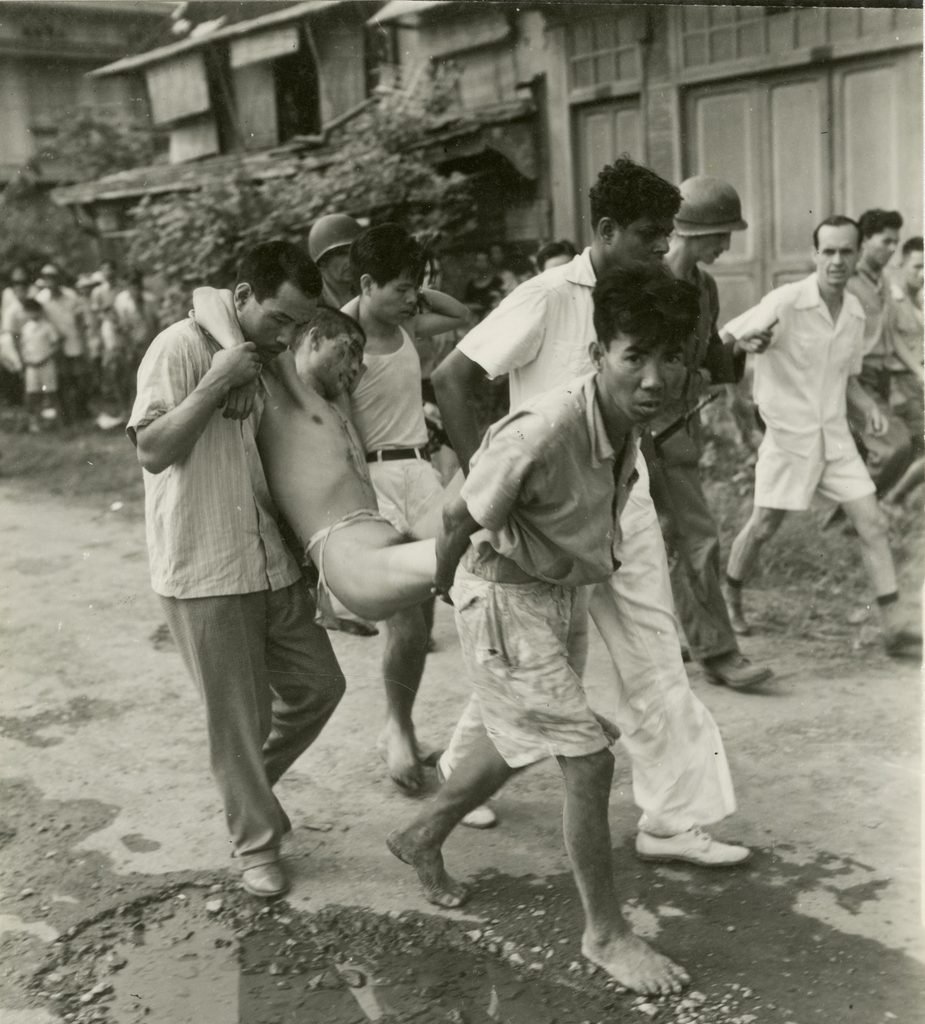
They were American soldiers who simply chanced upon us in the course of their final struggles against the Japanese. They voiced a hard-to-believe rumor: that we were safe. The war was over.
In the general rejoicing, single ladies forgot all their modesty, flung themselves at the troops, and greeted them with kisses. Imagine! They didn’t even know those men.
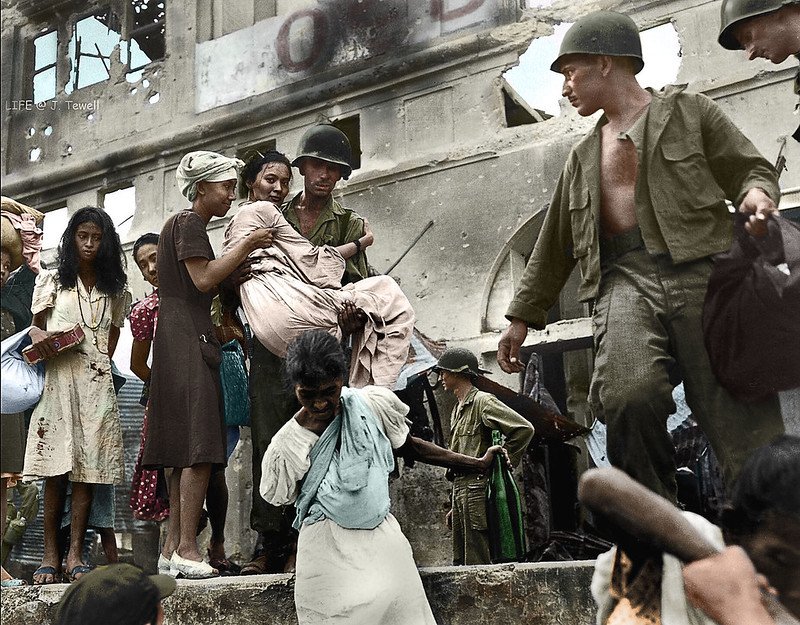
The townspeople shook with joy and relief. I was only five years old, but I remember how it felt. I understood the moment enough to weep with joy. If you had been there, you’d feel the same way. If you had seen it, you’d cry too.
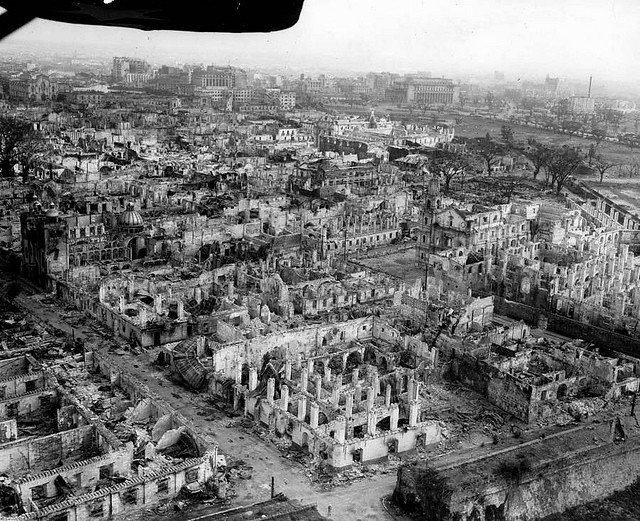
The battle for Manila’s liberation took place between early February and early March, 1945. In the face of defeat, the Japanese military committed their worst inhumanities at this time. U.S. forces, hyper-focused on victory, flattened the most beautiful buildings in the city.
By the time our grandparents were teenagers, they were going to the movies and sending each other American-style Valentine cards. Humanity’s resilience is not so surprising: we’ve been waging war for thousands and thousands of years. You could say we’re used to it. But these stories are a reminder for me to enjoy each peaceful moment, because truly, you never know when it’s time to march to that dreaded beat again.
There are certain memories we should make special efforts to preserve. Our ancestors are slowly fading away. More enlightening than photos and videos are the first-hand stories we must claim as our inheritance, while we can.
I see the world gradually being turned into a wilderness. I hear the ever-approaching thunder, which will destroy us too. I can feel the sufferings of millions and yet, if I look up into the heavens, I think that it will all come right.
― Anne Frank, The Diary of a Young Girl
(My paternal grandfather was four years old and lived in the portside district of Ermita, where his family owned a luxury menswear tailoring shop. This was much closer to the military stronghold of Intramuros. When Japanese clients tipped them off about the approaching battle, his family made an even more panicked escape, traveling by kariton almost a hundred kilometers south to Batangas and surviving on tutong, burnt rice.)
Leave a Reply